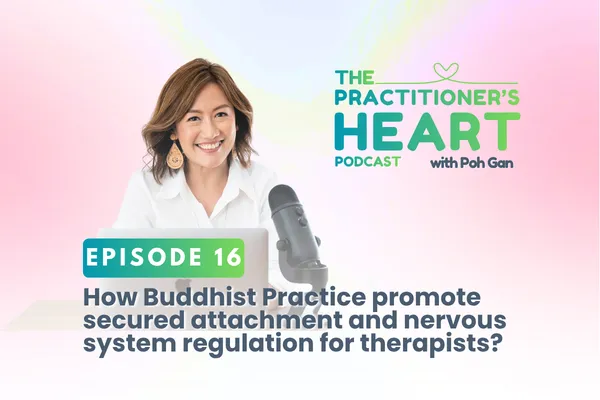
Episode 16: How Buddhist Practice Promotes Secure Attachment & Nervous System Regulation for Therapists?

EPISODE 16
How Buddhist Practice Promotes Secure Attachment & Nervous System Regulation for Therapists?
In this new episode, Poh explores the gentle intersection between Buddhist practice, attachment theory, and nervous system regulation and how these teachings can support therapists in cultivating greater steadiness within themselves.
As helping professionals, we often become the safe container for others while quietly carrying our own emotional fatigue, self-doubt, attachment wounds, and inner restlessness beneath the surface. Over time, this can leave us feeling disconnected from ourselves, even while we continue showing up for everyone else.
This episode is an invitation to return home to your inner refuge.
Secure Attachment Begins Within
Poh reflects on the deeper meaning of secure attachment not just as a relational experience with others, but as an internal relationship we cultivate with ourselves.
Through Buddhist practice, we begin learning how to pause instead of react, soften instead of cling and stay present instead of abandoning ourselves.
This steadiness gradually creates a greater sense of emotional safety, openness, and grounded presence.
Non-Attachment Is Not Emotional Distance
One of the central themes in this episode is the difference between non-attachment and emotional avoidance.
Non-attachment does not mean becoming cold, disconnected, or indifferent.
Instead, it is the capacity to love, care, and stay present without clinging, grasping, or losing ourselves in fear and control.
For therapists, this can profoundly shift the way we hold emotional space, both for clients and for ourselves.
The Nervous System & Buddhist Practice
Poh also explores how contemplative practices can support nervous system regulation in practical and embodied ways.
Practices such as:
• chanting
• meditation
• breath awareness
• mantra repetition
• grounding through the body
can gently activate states of safety, regulation, and calm within the nervous system.
Over time, these practices strengthen our ability to remain present during emotional intensity without becoming overwhelmed or shut down.
Beyond the “Perfect Therapist”
This episode also reflects on the suffering that comes from clinging to professional identity and perfectionism.
Many therapists quietly carry the belief that they must always:
be calm, be wise, be emotionally available, get it right.
But Buddhist wisdom reminds us that our worth is not dependent on performance.
We are already whole beneath the striving.
Returning to Inner Refuge
At the heart of this episode is a simple but powerful reminder:
A regulated therapist becomes a safer, steadier presence for others.
And that regulation does not come from perfection, it comes from returning, again and again, to awareness, compassion, and embodied presence.
A Gentle Invitation to the Bodhi Inner Path Circle
If this conversation resonates with you, Poh is also opening the doors soon to the Bodhi Inner Path Circle, a contemplative membership community for therapists and helping professionals seeking deeper practice, grounded companionship, and nervous system steadiness in the midst of modern life.
Inside the circle, we’ll gather for:
• meditation and contemplative practice
• Dharma-informed reflections
• practitioner book club conversations
• gentle community support away from social media
You do not need to walk this path alone.
Join the waitlist here: https://blossomingtrueself.com.au/communitywaitlist
🎧 Listen to Episode 16: How Buddhist Practice Promotes Secure Attachment & Nervous System Regulation for Therapists on The Practitioner’s Heart.